paradise still lost
[2018 - ?]
-
 more info
"All's Well That's Orwell," archival uv pigments on brushed aluminum, 85"x36", 2026, Shawn Saumell
-
 more info
"Can't Stop, Won't Stop," archival uv pigments on brushed aluminum, 64"x48", 2025, Shawn Saumell
-
 more info
"Glory Hole Days," archival uv pigments on brushed aluminum, 84"x46", 2024, Shawn Saumell
-
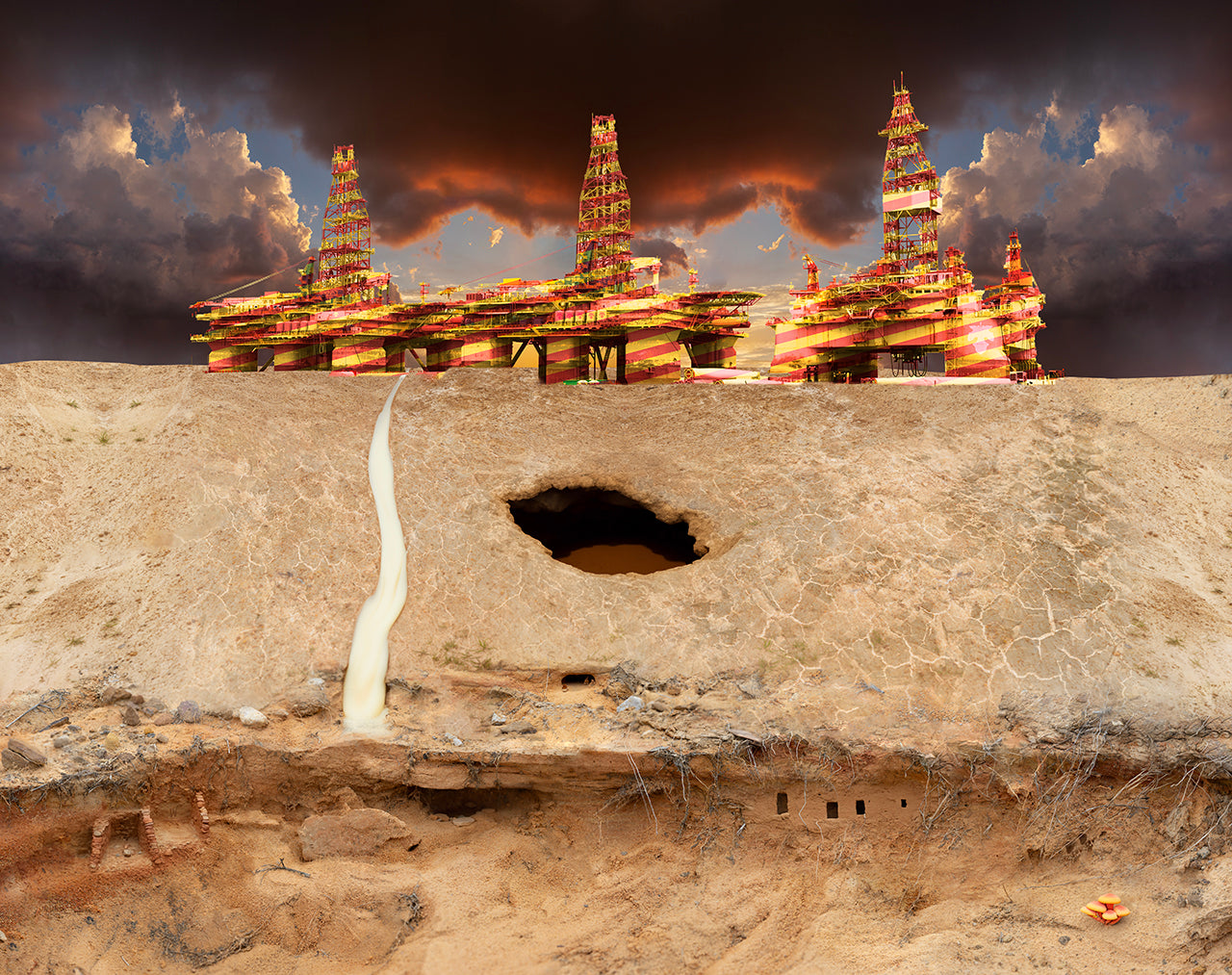 more info
"Money Shot," archival uv pigments on brushed aluminum, 45"x36", 2024, Shawn Saumell


-
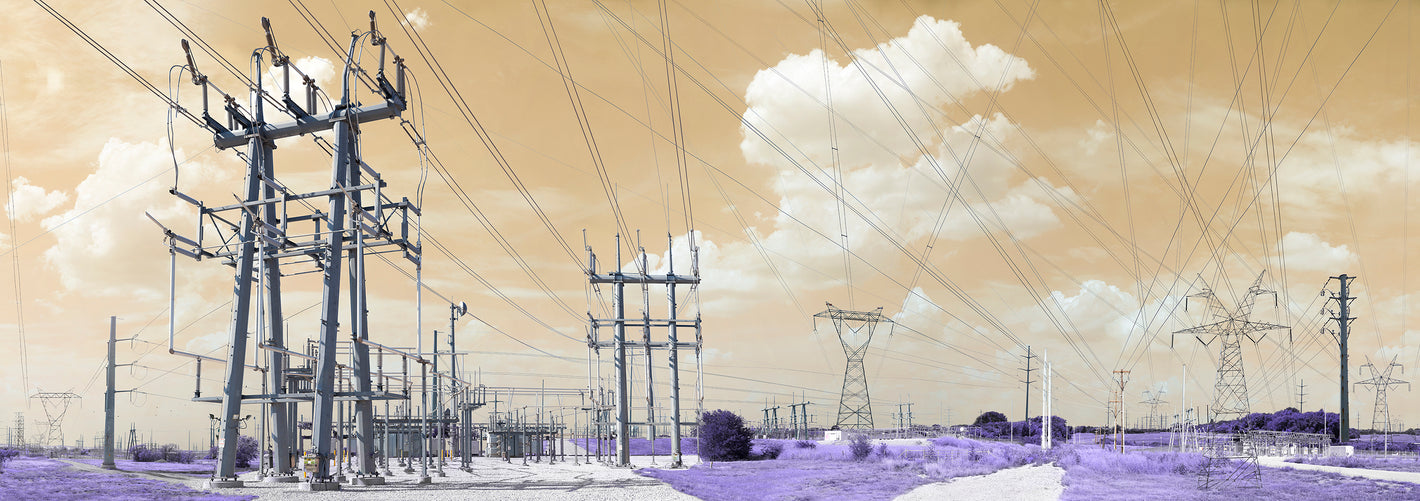 more info
"Power to the People," archival uv pigments on brushed aluminum, 85"x30", 2018, Shawn Saumell
-
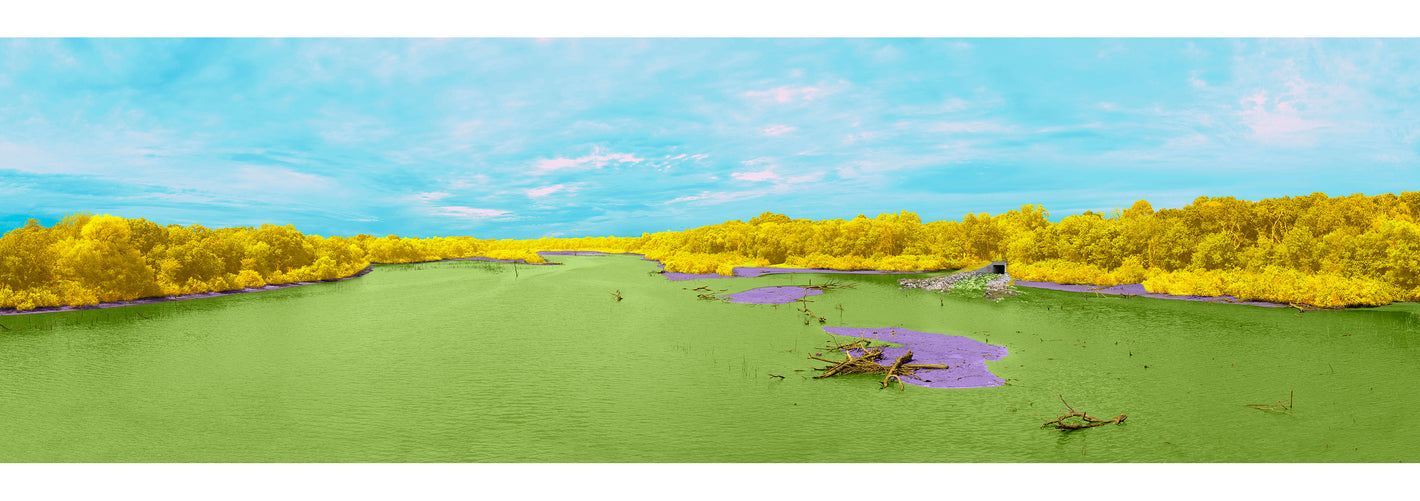 more info
"Oh, The Places You'll Sew," archival uv pigments on brushed aluminum, 60"x18", 2018, Shawn Saumell
-
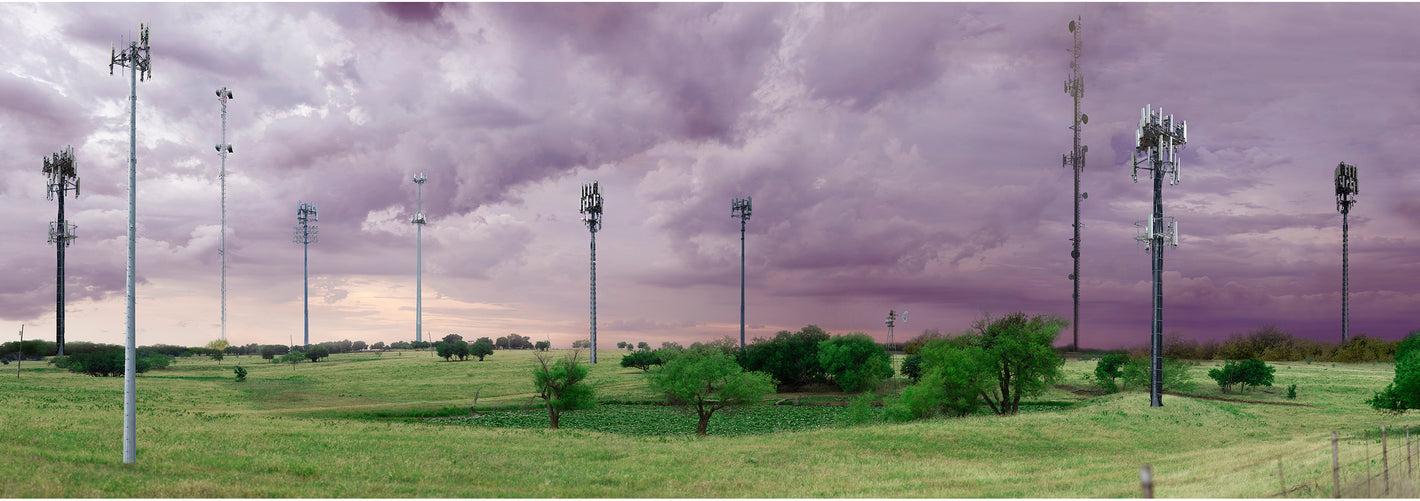 more info
"Can You Hear Me Now?," archival uv pigments on brushed aluminum, 60"x21", 2018, Shawn Saumell

artist statement
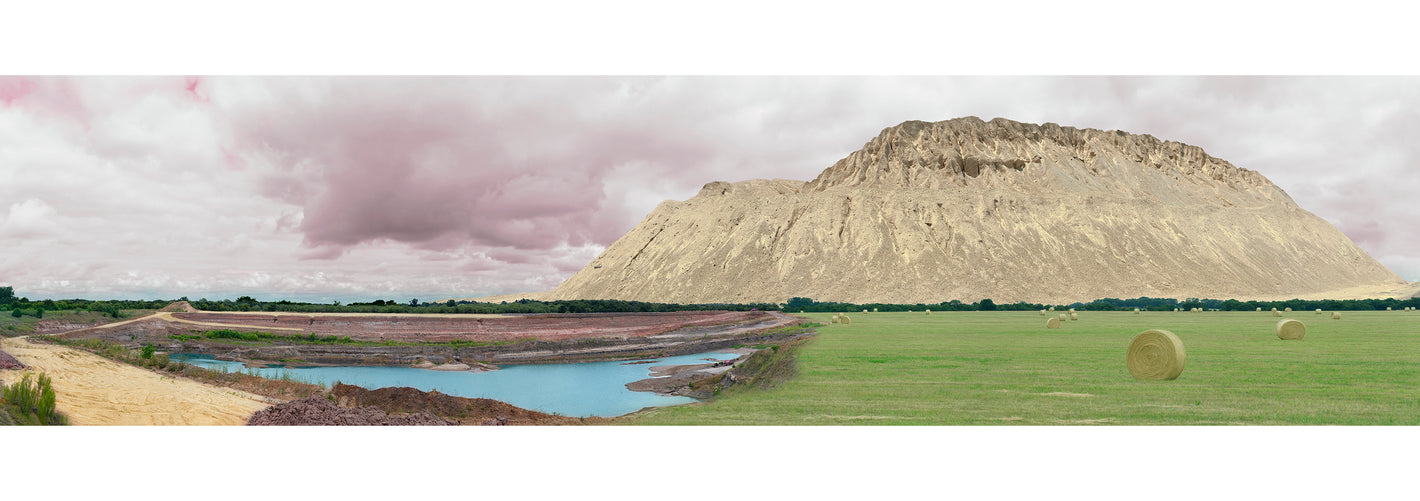
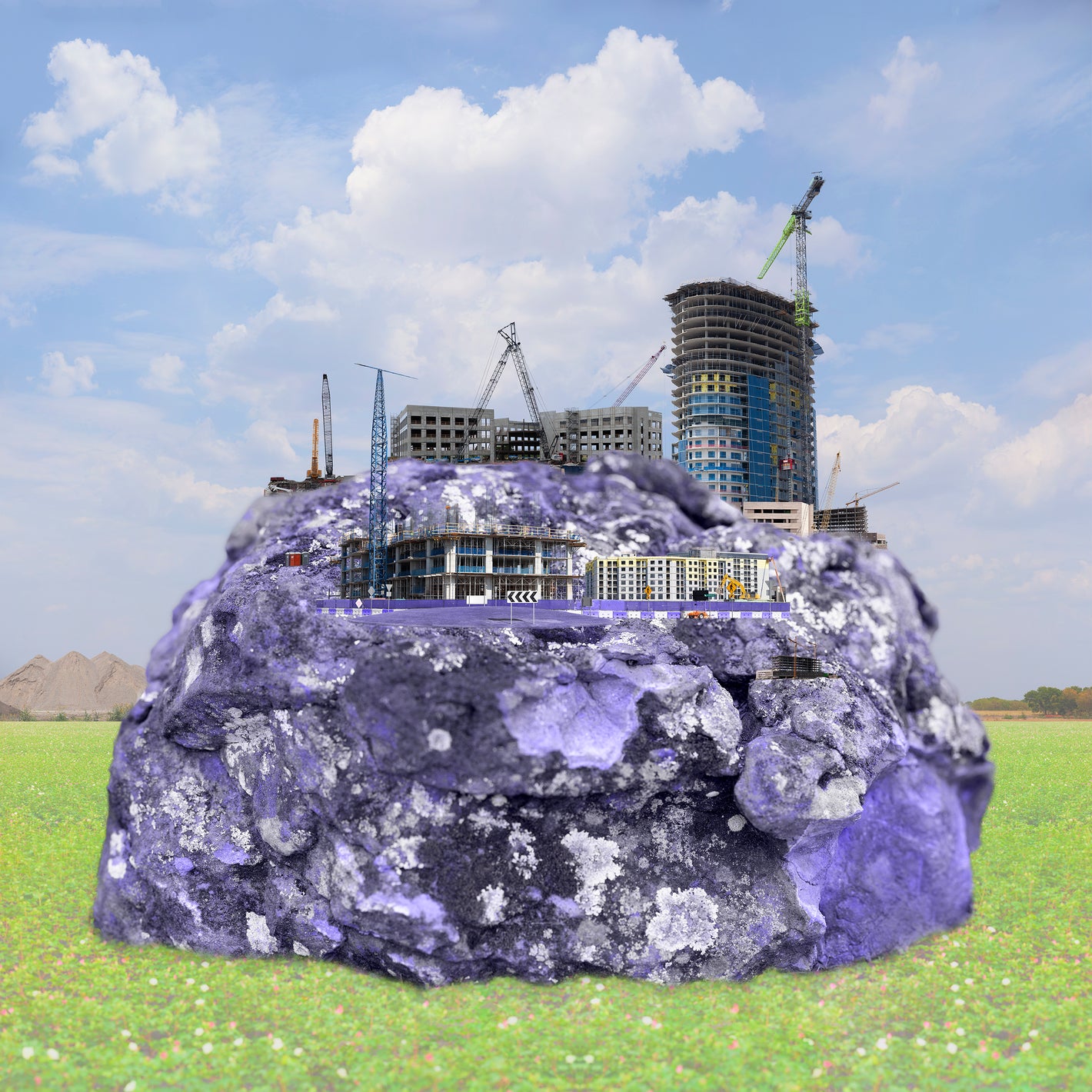
Paradise Still Lost is an ongoing series of constructed photographic landscapes that explores humanity's complex relationship with the natural world. Drawing from thousands of individual photographs, I digitally assemble expansive environments where industry, infrastructure, agriculture, consumption, and development are woven into seemingly idyllic landscapes. The resulting images are then meticulously refined through digital painting, creating hyperreal scenes that exist somewhere between documentation and imagination.
At first glance, these landscapes appear familiar—even beautiful. Upon closer inspection, subtle interventions emerge. Oil refineries rise from rolling hills, transmission towers span open skies, concentrated animal feeding operations replace pastoral fields, and fragments of contemporary life quietly accumulate throughout the terrain. Hidden in plain view, these details invite viewers to slow down, question first impressions, and uncover layered narratives embedded within each composition.
Rather than assigning blame or offering simple conclusions, Paradise Still Lost examines the tensions between progress and consequence, abundance and exploitation, convenience and responsibility. The work acknowledges that many of the systems shaping our world have brought undeniable advances while also transforming the environments on which we depend.
The landscapes become spaces for reflection rather than certainty. They ask how our pursuit of growth has reshaped both the physical world and our perception of it. By presenting environmental transformation through visually seductive imagery, the series encourages viewers to look longer, question more deeply, and consider the complex relationship between human ingenuity and the fragile paradise we continue to inherit, alter, and redefine.